You smile when people ask when you and him are getting married.
"Soon," you say.
But underneath that smile, something in you flinches every single time.
Because you don't actually know.
You've met his family more times than you can count. You've sat through his cousin's wedding, his sister's wedding, his best friend's wedding, clapping, dancing, smiling for pictures, while a quiet voice in your head keeps asking the same question.
When is it going to be me?
Your mother asks every phone call. Not directly anymore. She's learned not to. But you hear it in the way she says, "So how is everything now?" You know exactly what she means.
You've given him your best years. Your time. Your loyalty. The version of you that showed up for him when things were hard, that believed in him before he believed in himself.
And every time the topic comes up, he says the same thing.
"Let's not rush these things."
"We're building something solid."
The words sound right. They always do. But the years keep passing, and somewhere underneath the patience, a fear has started growing that you've never said out loud to anyone.
What if he loves you enough to stay… but not enough to choose you?
Drop everything you are doing now and listen to every word I'm about to say.
This method didn't come from a relationship coach. It didn't come from a book, a podcast, or a YouTube video.
It came from a woman who spent over three decades quietly watching what actually predicts whether a relationship becomes a marriage, long before either person in it knows the answer themselves.
Hi, my name is Amarachi.
First thing you should know about me is that I'm not a relationship coach, a therapist, or an expert of any kind. I'm just a woman who spent almost five years waiting for an answer nobody was willing to give me, until one conversation changed everything.

My name is Amarachi Yusuf. I'm 33 years old and I live in Abuja.
For almost five years, I was in what everyone called a "serious relationship."
We attended weddings together. Our families knew each other. I spent holidays with his relatives. I supported him when his business struggled, and I celebrated him when things finally improved.
From the outside, we looked like a couple heading toward marriage.
From the inside, I was quietly terrified.
Every time marriage came up, Tunde would smile and say:
"Don't worry. We're building something solid."
Or:
"Let's not rush these things."
Or, the one that always got me:
"You know you're the woman I want to marry."
The words always sounded right. But the years kept passing.
At first, I told myself I was overthinking. Then my 30th birthday came. Then my 31st. Then my 32nd.
Every engagement announcement on social media started feeling personal. Every wedding invitation felt like a reminder that everyone else seemed to be moving forward while my relationship remained exactly where it was.
The fear wasn't that Tunde didn't love me.
The fear was something I could barely admit to myself.
What if he loved me enough to stay… but not enough to choose me?
What if one day we broke up, and six months later, I was looking at engagement photos of him with another woman?
That thought haunted me.
So I tried everything I could think of.
I tried being the perfect girlfriend: endlessly patient, endlessly supportive, endlessly loyal. It earned me his comfort. It never earned me urgency.
I dropped hints about marriage and engagement. He deflected, or joked it off, every single time.
I got closer to his family, hoping the gentle pressure would push things forward. It created tension between us instead. Nothing moved.
I gave one soft ultimatum, once. He promised "soon." Nothing followed.
I asked my married friends for advice. Half of them said leave. Half of them said wait. I ended every conversation more confused than before.
And mostly, I just told myself to be patient and trust the process, year after year, which only delayed the moment I would actually get a real answer.
Then I met Mrs. Zainab Suleiman.
I met her at my cousin's wedding in Kaduna. The ceremony had ended. The reception was winding down. A group of relatives were standing outside discussing the wedding, and then someone turned to me and laughed.
"Amarachi, you've attended enough weddings. When are we coming for yours?"
Everyone laughed. I laughed too. The way people do when they don't want anyone to know the question hurt.
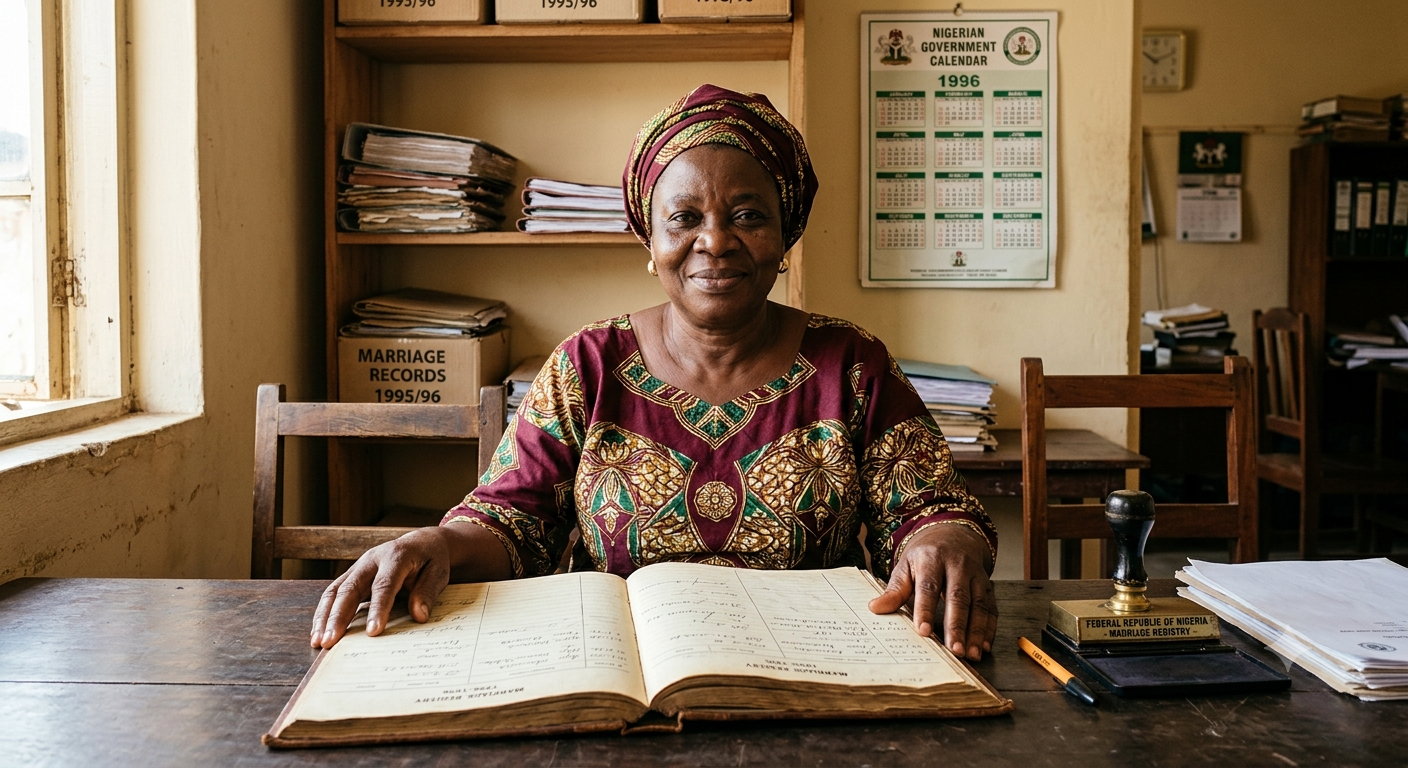
A few hours later, while helping arrange chairs after the event, Mrs. Zainab approached me. She'd worked as a marriage registrar in Kaduna State for 34 years. People always assumed her job was paperwork. It wasn't.
For decades, she'd sat across from couples preparing to marry, watching how they interacted, listening to who was enthusiastic and who was hesitant, who was leading the process and who was dragging their feet. But what fascinated her most wasn't the couples who showed up to her office. It was the ones who never did.
People in her community joked that she could tell where a relationship was headed before the couple themselves knew. She always laughed and said, "I'm not predicting the future. I'm simply paying attention to movement."
She looked at me quietly for a moment. Then she asked:
"How long have you been waiting?"
Not "how long have you been dating." Not "when is the wedding." She asked exactly: how long have you been waiting.
I remember staring at her. Then I answered: "Almost five years."
She nodded. Not surprised. Not shocked. Just nodded.
Then she said something that changed everything.
"The problem is not that you don't know what he says. The problem is that you haven't measured what he does."
I didn't believe it at first. It sounded too simple.
She called it The Movement Method. She believed most women were paying attention to the wrong thing: listening to promises, intentions, explanations, and rarely measuring actual progress.
"Commitment is not revealed by words," she told me. "Commitment is revealed by movement."
She gave me a simple framework. For seven days, I was to stop focusing on reassurance and start documenting evidence across five specific areas: future planning, family integration, financial preparation, decision-making, and relationship progression over the past 12 months. Not what had been discussed or promised, but what had actually changed.
"People rarely hide their intentions," she said. "Most of the time, they reveal them through patterns."
The first few days, I doubted it would show me anything new.
Day 2, I realized something uncomfortable: most of my confidence in the relationship came from conversations, not actions.
Day 4, I noticed that almost every future plan Tunde discussed involved his goals, his timeline, his ambitions. Very few involved us.
Day 6, for the first time in years, I stopped asking "what does he mean?" and started asking "what is he doing?"
Then came Day 7: the breakthrough.
When I completed the final score, I expected the results to be mixed. Instead, they were painfully clear. Future planning: weak. Family integration: minimal. Marriage discussions: always vague. Timeline: non-existent.
Five years. And almost nothing pointed toward an actual marriage.
Mrs. Zainab looked at my scorecard, then asked a question I'll never forget:
"Amarachi, if you remove his words and keep only his actions, what story do they tell?"
I looked back down at the page. And suddenly everything made sense.
The relationship wasn't moving slowly. It wasn't moving at all. For years, I had been treating hope as evidence. I had been measuring intentions instead of movement.
I wasn't waiting for a proposal. I was waiting for a decision he had already made. I just hadn't accepted it yet.
I started crying. Not because I was heartbroken. Because deep down, I already knew. The framework didn't create the answer. It revealed the answer that had been sitting in front of me for years.
The real test came three weeks later.
I sat across from Tunde and had the most honest conversation we'd ever had. For the first time, I wasn't looking for reassurance, promises, or another explanation. I was looking for clarity.
When I asked him directly what timeline he saw for marriage, he gave the same answer he had given for years: "Let's just keep building."
Normally, I would have accepted that. This time, I didn't. Because now I understood something I hadn't understood before. A relationship cannot survive forever on someday. Eventually, someday has to become a plan.
Tunde noticed the difference immediately. He looked at me and said, "You've changed."
I nodded. "No. I just stopped confusing waiting with progress."
For the first time in five years, there was nothing left to decode. Nothing left to interpret. Nothing left to hope would magically change.
I finally had my answer. And strangely enough, that answer gave me something I hadn't felt in years. Peace. Not because it was the answer I wanted, but because it was the truth.
Word got around quietly after that.
A cousin who'd been "waiting" almost three years tried the same five-day observation and finally confronted what she'd been avoiding. A friend from church used it and realized, with relief instead of heartbreak, that her relationship actually was moving. She just hadn't been looking at the right things. Another woman I'd known from university used it and walked away from a relationship she'd been afraid to leave for two years, finally free of the guessing.
After a while, I couldn't keep explaining the framework one-on-one to every woman who asked. So I sat down and wrote it all out properly.
I put everything (the full framework, the exact five areas to measure, the daily structure, what to look for, what to ignore, how to score it honestly) inside one simple guide.
Introducing…
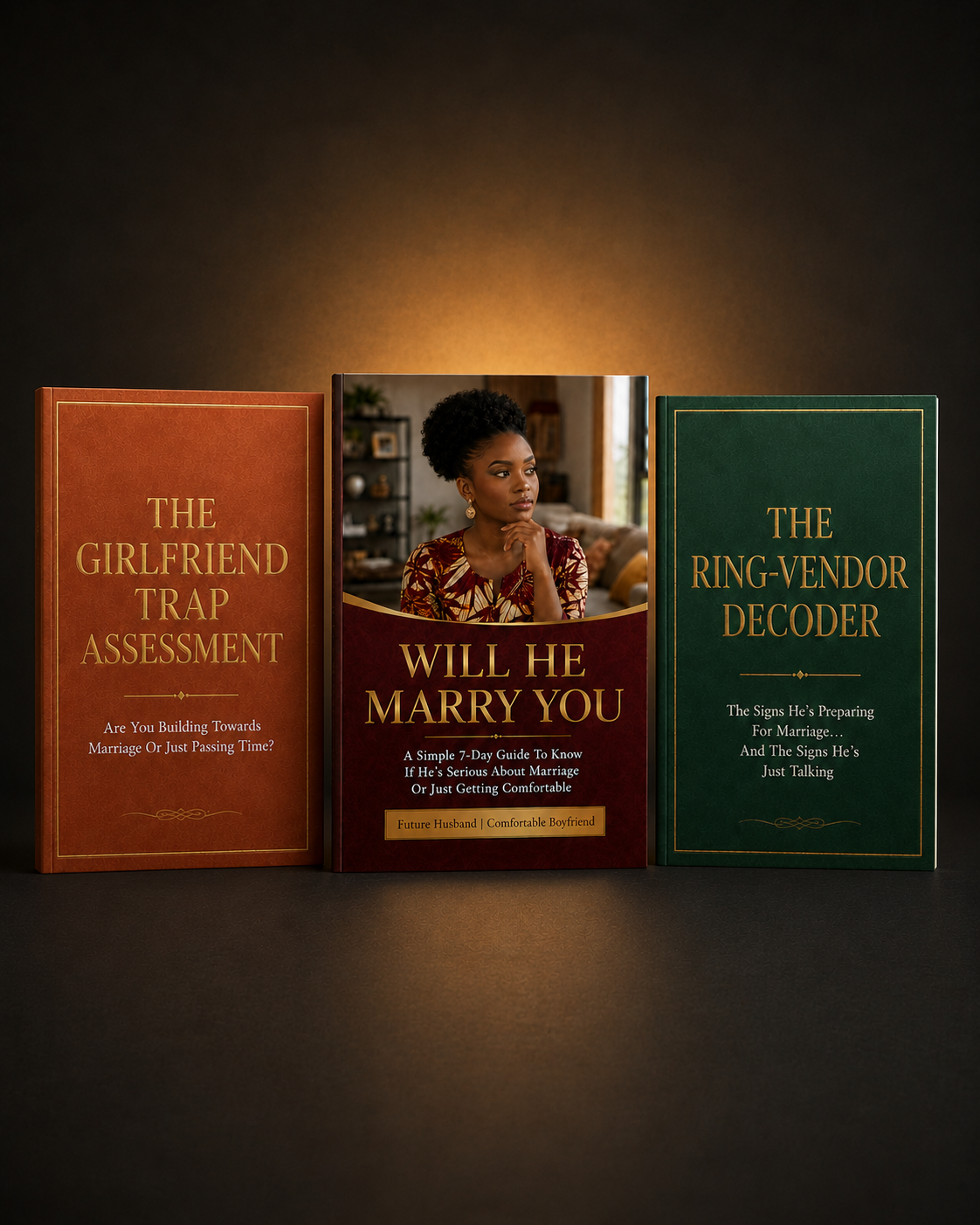
A Simple 7-Day Guide That Reveals Whether He's Serious About Marriage Or Just Getting Comfortable
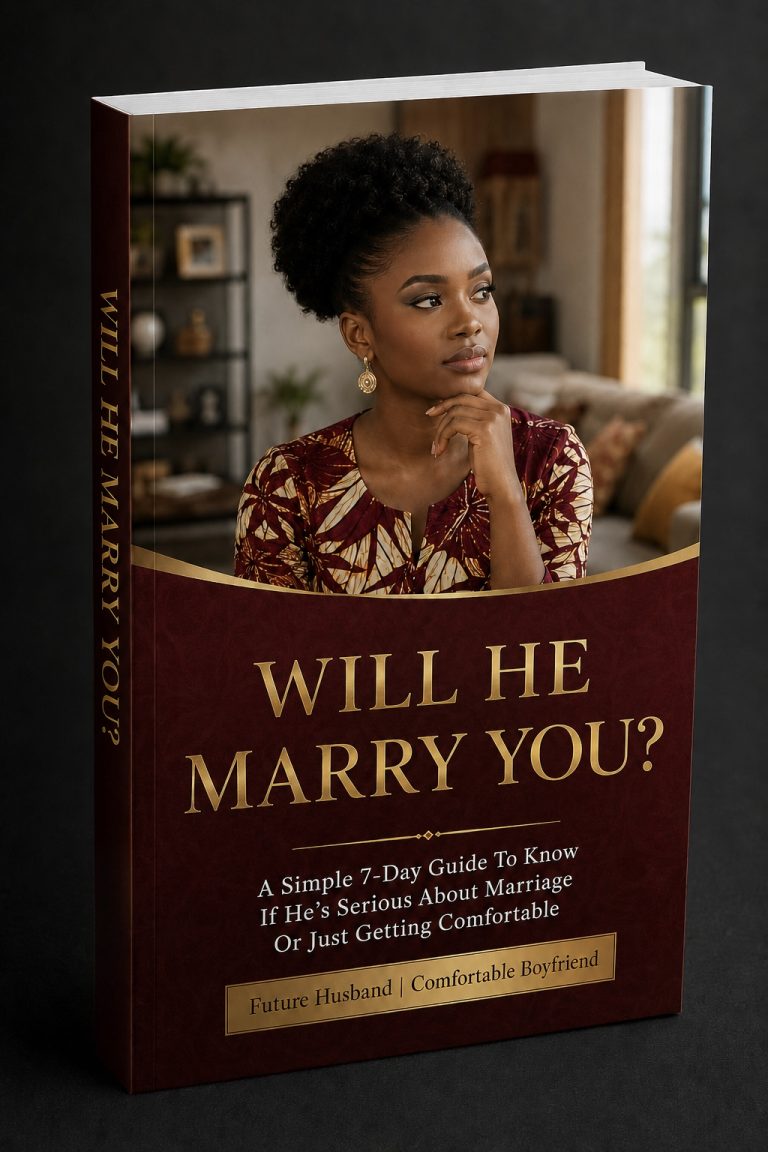
Inside this e-guide, you'll discover:
- The Comfortable Boyfriend Problem: the real, root-cause reason some relationships stay stuck for years while others move steadily toward marriage. (Pg. 2)
- The Relationship Reality Audit: the exact diagnostic Mrs. Zainab used for 34 years to tell where a relationship is actually headed. (Pg. 5)
- The Commitment Signal Framework: how to tell the difference between genuine commitment indicators and empty reassurance. (Pg. 9)
- The Comfortable Boyfriend Detector: a simple way to identify whether he's building a future with you or maintaining a convenient comfort. (Pg. 13)
- The Wife Standard Framework: the specific behaviors and boundaries that make a man see you as the one to marry, not the one to keep around. (Pg. 17)
- The Commitment Timeline Protocol: how to measure relationship movement against healthy progression benchmarks, for this relationship or any future one. (Pg. 21)
- The 15-Minute Relationship Scorecard: your quick win. Score your relationship in fifteen minutes and get instant clarity before you've even finished the rest of the guide. (Pg. 24)
And the best part? You don't need to beg, pressure, or give an ultimatum. It's the same simple framework that gave me my answer, and has now quietly helped hundreds of women find theirs too.
Share Your Experience
- Hours spent with Mrs. Zainab documenting the actual framework, word for word, until it was accurate
- A professional editor to make sure every section reads clearly and simply
- Design work to turn it into something that actually looks and feels premium
- Testing the scorecard and worksheets with real women before releasing it publicly
- Building and hosting the page you're reading right now
I'm not going to charge you ₦120,000.
I won't even charge you ₦60,000.
Not even ₦30,000.
In fact, you won't even pay ₦15,000.
A fair price for me would be just ₦15,000, but that's not what you'll pay today.
If you're among the first 20 people today, you'll get these amazing BONUSES alongside your guide. (TODAY ONLY)
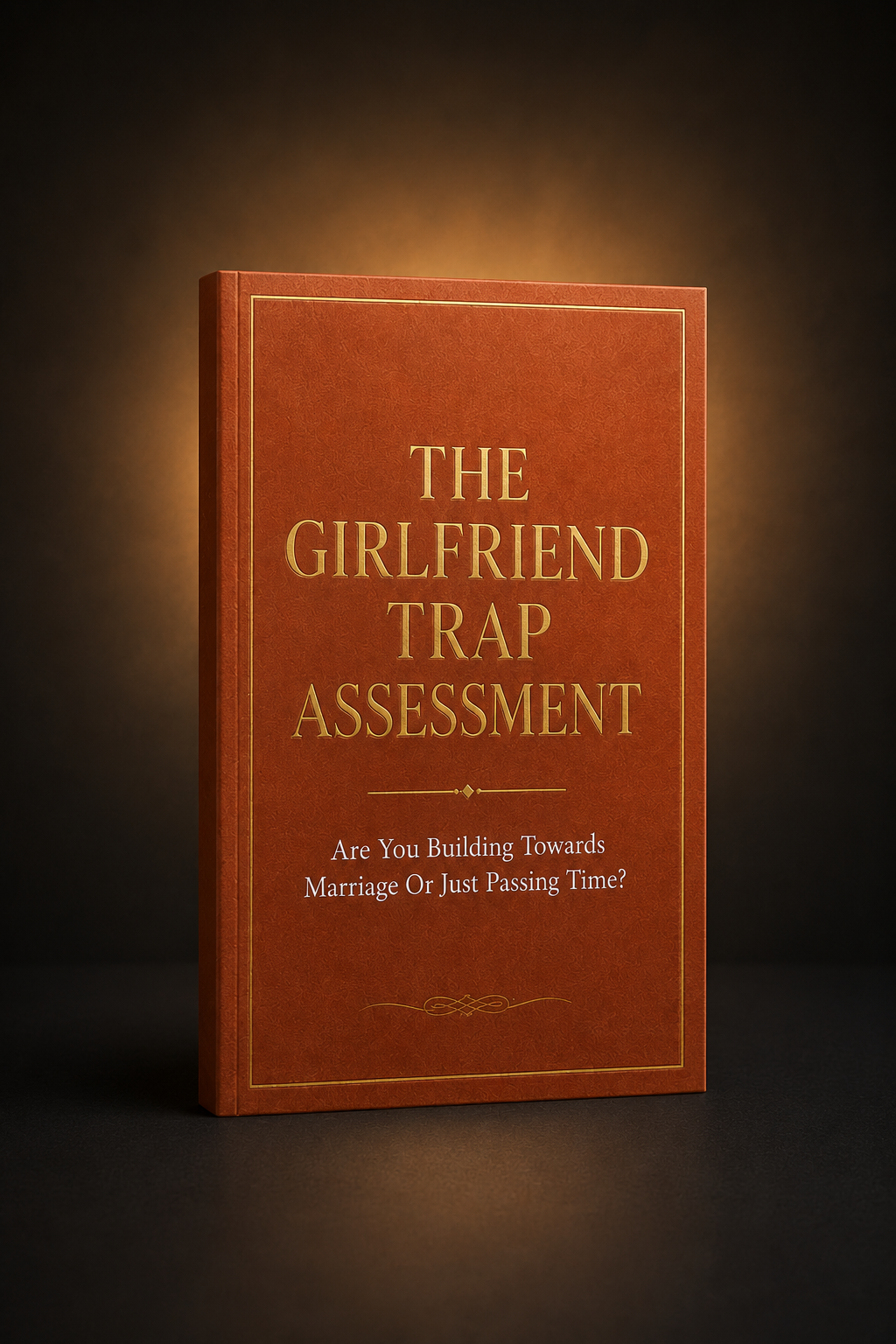
Bonus 1: The Girlfriend Trap Assessment
Discover whether you've been giving marriage-level benefits without receiving marriage-level commitment.
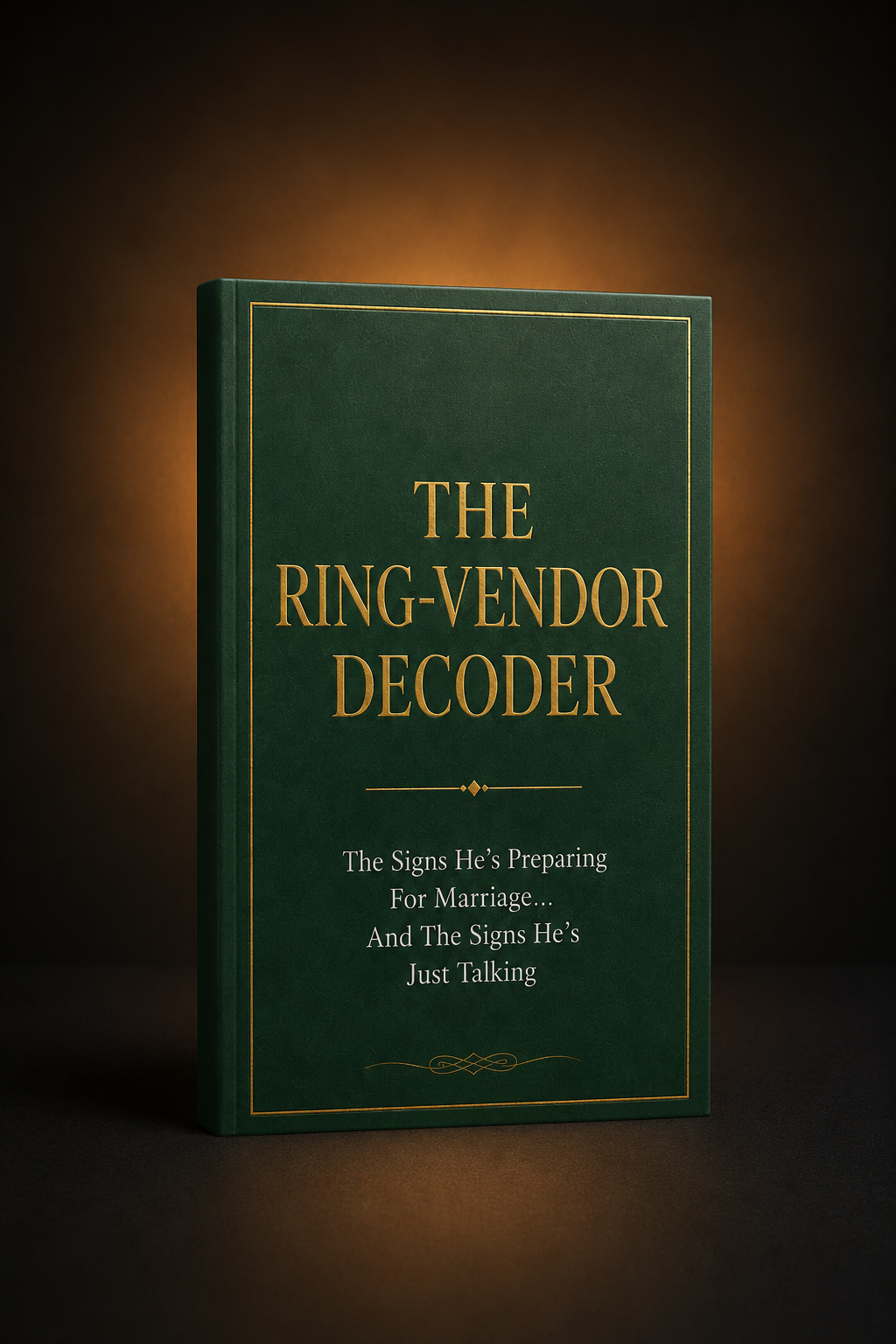
Bonus 2: The Ring-Vendor Decoder
The real operational signs a man is preparing for marriage, versus just keeping things comfortable.
Bear in mind, you're not the only one viewing this page right now.
Still Feeling Unsure?
I totally understand. Which is why I'm making you a bold, risk-free promise:
Try the full 7-Day Protocol. Go through the audit. Use the scorecard. Apply the framework to your own relationship, honestly.
If it doesn't give you real clarity, get every kobo back within 30 days. No long explanation needed. Just send an email and you'll be refunded.
This is how confident I am that once you see your own relationship clearly, you'll never want to go back to guessing.
Option 1: Take action. Get "Will He Marry You?" And finally regain your clarity.
OR
Option 2: Close this page and keep waiting, keep guessing, keep telling yourself to be patient. Maybe God wanted you to see this. Who knows?